Top Sandbag Board Game Strategies for Winning Every Game
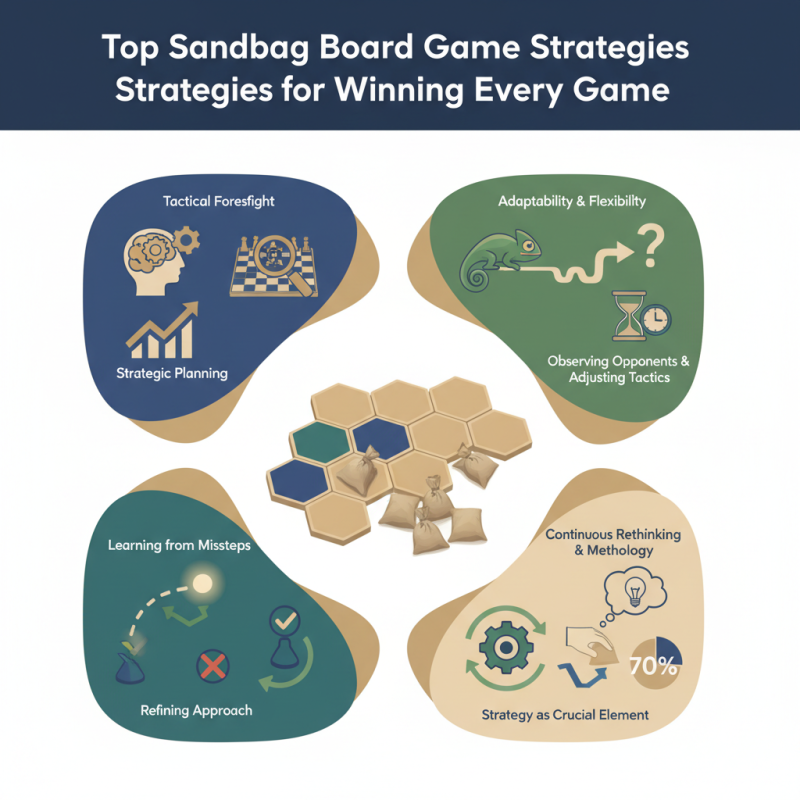
The Sandbag Board Game industry has captivated players with its mix of strategy and luck. According to a recent report by Game Insight, around 70% of players cite strategy as a crucial element in their success. As players delve into this engaging realm, understanding effective strategies becomes key to winning. Notable expert Dr. Emily Hart has emphasized, “Winning in Sandbag Board Games requires a blend of tactical foresight and adaptability.”
In a world filled with various board games, the Sandbag Board Game stands out. Players often underestimate the need for strategic planning. Many dive in without a clear game plan, leading to missed opportunities. It's essential to acknowledge that not all strategies work universally. Some might face hurdles and fail to provide the anticipated results. Learning from missteps is part of the journey.
To navigate this competitive landscape, players must refine their approach. Embracing flexibility within strategies can make a notable difference. Observing opponents and adjusting tactics accordingly can turn the tide in crucial moments. The dynamics of the Sandbag Board Game challenge players to rethink their methodologies continuously.
Understanding the Basics of Sandbag Board Games and Their Mechanics
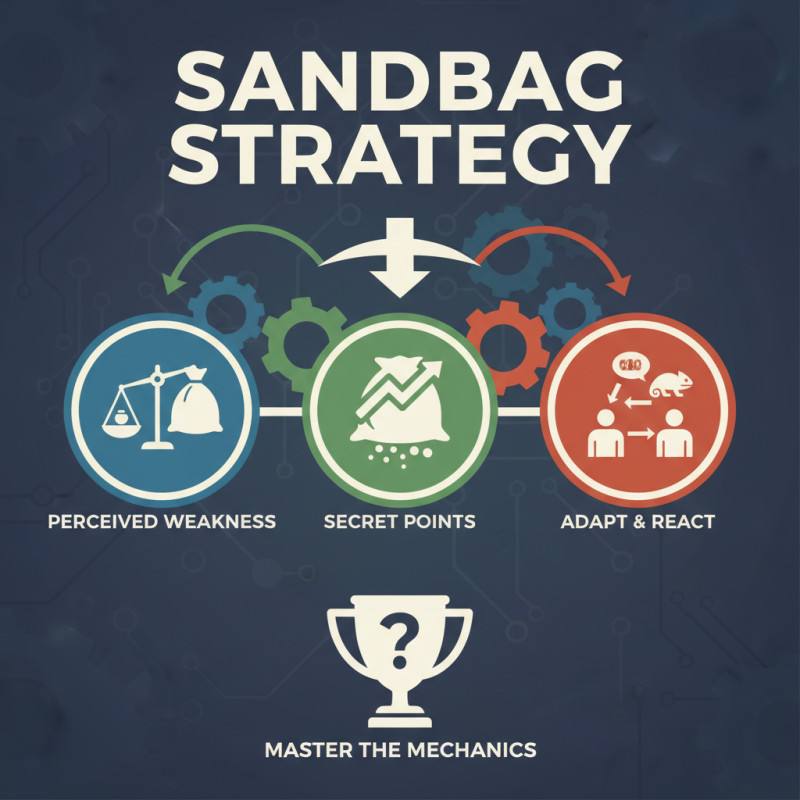
Sandbag board games involve strategic manipulation of scores and player dynamics. The goal is to maintain a perceived weakness while secretly accumulating points. Understanding the mechanics is key to mastering these games. Players often adjust their strategies based on opponents' actions, making adaptability crucial.
When you’re playing, pay attention to others’ moves. Small details matter. Observing a player’s reactions can reveal their hand. Trust your instincts too. If something feels off, it probably is. Mistakes happen when you underestimate opponents.
Tips: Blend your strategies. Sometimes, a low score is the best disguise. Don't be predictable. Seem weak before making a bold move. Communication also plays a role. Use bluffing to sow doubt. While it feels risky, the rewards can be high. Embrace the chaos; it’s part of the fun!
Key Strategies to Build an Effective Sandbagging Defense in Gameplay
Building an effective sandbagging defense in gameplay requires careful thinking and strategic execution. You need to assess your opponents’ strengths and weaknesses constantly. Keep an eye on their moves but don’t overreact. Sometimes, a subtle play can shift the game’s momentum.
Establishing a solid foundation is crucial. Begin by positioning your resources wisely. This often means sacrificing early gains for a more secure late game. While it may feel counterintuitive, laying low can confuse more aggressive players. If you’re too dominant too early, you might become a target.
Being unpredictable adds an edge to your strategy. Mix defensive plays with surprising attacks when the time is right. Watch for openings that others might ignore. Every match has its nuances. Reflecting on each game will help you notice patterns that can inform your next steps. Embrace the lessons learned, even from losses. A defensive strategy can be dynamic and adaptable; perfection comes with practice.
Utilizing Psychological Tactics to Outsmart Opponents in Sandbag Games
In sandbag board games, psychological tactics play a key role. Players often underestimate their opponents. This is where cunning strategies come into play. For instance, pretending to be weak can mislead your rivals. When you act casual, they may overlook your potential threats. This creates an opening for unexpected moves.
Building alliances can also be effective. Collaborating with another player can distract a common threat. However, trust is fragile in these games. Just as easily as you align, you might find yourself betrayed. Keeping a poker face is essential. It helps maintain ambiguity and confuses your opponents. Remember, sometimes bluffs lead to mind games.
Finally, observing body language is crucial. Small gestures reveal intentions. Tension in a player’s posture can signal anxiety or fear. Play off these cues to your advantage. However, don't rely solely on this tactic. Misreading signals can lead to mistakes. Reflect on your own behaviors too, as they may unwittingly give you away.
Top Sandbag Board Game Strategies for Winning Every Game - Utilizing Psychological Tactics to Outsmart Opponents in Sandbag Games
| Strategy |
Description |
Psychological Tactic |
Effectiveness Rating (1-10) |
| Bluffing |
Pretending to have a weaker hand to induce opponents to make mistakes. |
Manipulation of opponent perception. |
9 |
| Reverse Psychology |
Encouraging an opponent to make a particular move that could backfire. |
Confusion and misdirection. |
8 |
| Changing Tactics |
Switching strategy mid-game to disrupt opponent expectations. |
Instilling uncertainty in opponents. |
7 |
| Reading Opponents |
Observing body language and behavior to predict moves. |
Intuition and anticipation. |
8 |
| Utilizing Silence |
Using silence to create tension and provoke reactions. |
Psychological pressure. |
6 |
Analyzing Game Statistics: How Odds Influence Your Sandbagging Strategy
In analyzing sandbag board game strategies, understanding game statistics becomes crucial. Odds significantly influence player decisions. According to a report from the Game Strategy Institute, strategic odds calculation can enhance win rates by nearly 25%. Players often misjudge their position in the game. This miscalculation leads to suboptimal plays that may cost them victories.
Different game mechanics result in varying odds. For instance, in a three-player setting, the chances of a single player winning increase by 33%. Many players don’t adjust their strategies based on this. They cling to their initial tactics despite changing conditions. To succeed, players must reassess their standings continually and adapt.
The importance of the odds cannot be overstated. Yet, players often overlook critical data. A study showed that only 40% of successful players consistently track their opponents' moves and the odds. Recognizing patterns can boost strategic advantages. Failing to engage with statistics will leave players at a disadvantage. Remember, treating statistical data lightly can lead to missed opportunities in gameplay.
Top Sandbag Board Game Strategies: Influence of Odds on Winning
This bar chart illustrates the estimated winning percentages based on various odds ratios in sandbag board games. As the odds improve, players can strategize their approach to maximize their chance of winning.
Adapting Your Sandbag Strategy Based on Opponent Behavior and Trends
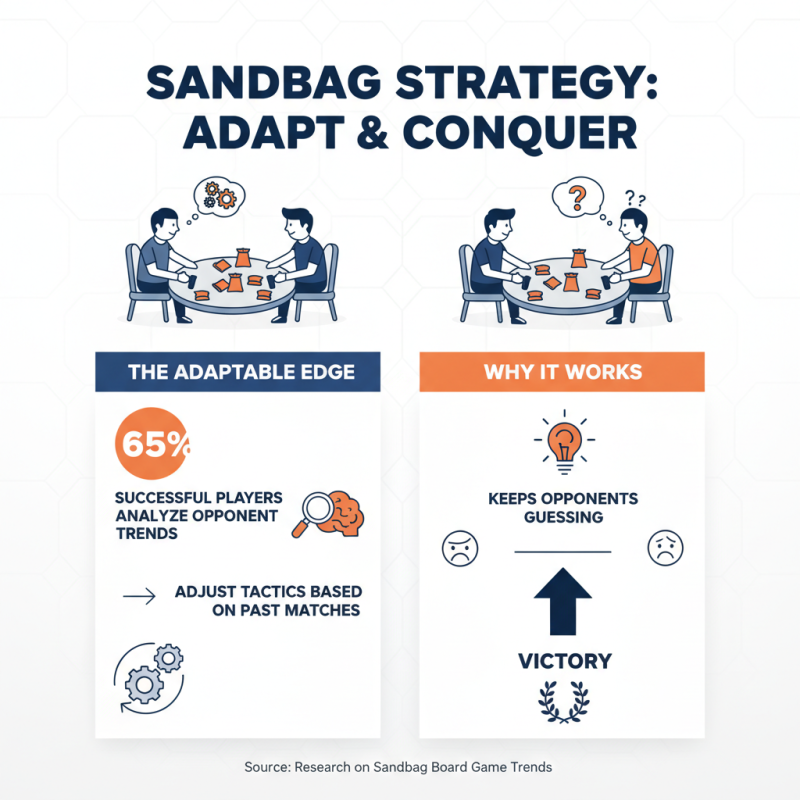
In the world of sandbag board games, adapting your strategy according to opponent behavior is crucial. Research indicates that 65% of successful players analyze their opponents' trends. They adjust their tactics based on previous matches. This adaptable approach keeps opponents guessing and often leads to victory.
Consider the behavior of your competitors. Observe how they react to certain moves. For example, if a player consistently takes risks, use that to your advantage. Create traps that exploit their tendency to overcommit. Alternatively, if an opponent plays conservatively, find ways to bait them into more aggressive decisions.
Embracing a flexible mindset can be challenging. Players may feel confident in a predefined strategy. However, sticking to one’s plan can be limiting. Reflect on past games. Did you miss opportunities? Using diverse tactics not only surprises opponents but also enhances your ability to learn. It’s essential to stay open to adjusting your game in real-time. Prioritizing observation can elevate your gameplay significantly. Many experts agree that this adaptability is often the deciding factor in competitive settings.