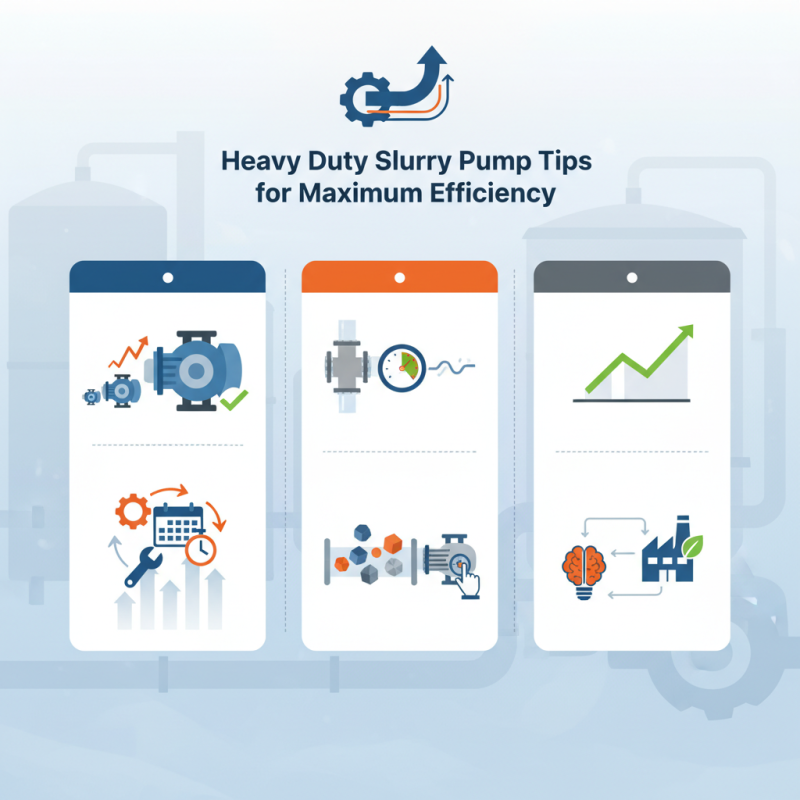
Heavy Duty Slurry Pump Tips for Maximum Efficiency?
heavy duty slurry pumps are essential in many industrial applications. They transport abrasive, thick mixtures efficiently. However, not all pumps perform equally well. Understanding how to maximize their efficiency can lead to better performance and lower costs.
When using a heavy duty slurry pump, factors like sizing and maintenance are crucial. A pump that is too small or too large can cause issues. Regular maintenance can also prevent unexpected breakdowns. Even minor neglect can result in significant downtime.
Achieving maximum efficiency with heavy duty slurry pumps requires attention to detail. Operators must monitor flow rates and pressure carefully. They should consider the type of materials being pumped. Small adjustments can lead to improved longevity and performance. Reflecting on these aspects can enhance overall operational effectiveness.
Understanding the Basics of Heavy Duty Slurry Pumps
Heavy-duty slurry pumps play a crucial role in many industries. They are designed to handle abrasive and viscous materials. Understanding the basics can help optimize their performance and ensure longevity.
The pump's design is essential for efficiency. It often features a robust casing and high-quality impellers to withstand harsh conditions. However, many users overlook the importance of regular maintenance. Neglect can lead to reduced efficiency and unanticipated failures.
Selecting the right pump size is another key factor. An oversized pump can waste energy, while an undersized one may not handle the required flow. Users must analyze their specific needs. Small adjustments may yield significant improvements. Training staff on pump operation is also vital. Misunderstandings can lead to operational mishaps. Each detail matters.
Heavy Duty Slurry Pump Efficiency Comparison
This chart illustrates the efficiency percentages of different heavy-duty slurry pumps. Understanding their efficiency can help in selecting the right pump for optimal performance in various applications.
Key Features That Enhance Slurry Pump Efficiency
When selecting a slurry pump, key features can significantly enhance its efficiency. The construction material is crucial. A durable material like high-chrome alloys can resist abrasion better. However, some users might not prioritize this, leading to increased wear and tear. It's essential to assess the type of slurry and its characteristics. Pumping fine particles can wear down pumps faster.
Another significant feature is the pump design. A properly designed impeller can maximize flow while minimizing energy consumption. Users often overlook this aspect, which can result in higher operational costs. Pump maintenance also plays a role. Regular checks can help identify wear issues early. Neglecting maintenance can lead to unexpected downtime and repair costs.
Efficiency can also be improved through the right pump sizing. An oversized pump wastes energy, while an undersized pump may struggle. Both can have serious implications. Operators should monitor the pump’s performance regularly. Small adjustments based on actual usage can lead to substantial improvements over time. In a world where every detail matters, focusing on these features makes a difference.
Maintenance Best Practices for Long-lasting Performance
Proper maintenance is crucial for heavy-duty slurry pumps. Neglect can lead to inefficiency and costly breakdowns. According to industry reports, nearly 30% of slurry pumps fail due to poor maintenance practices. Regular inspection can prevent these issues. Check couplings and seals often. Look for signs of wear and corrosion. Simple visual checks can save time and money.
Lubrication is essential. Many operators overlook it. Insufficient lubrication increases friction. This leads to overheating and reduced pump life. Reports indicate that regular lubrication can extend pump life by up to 40%. Perform routine oil changes. Use the appropriate lubricants for each pump type.
Monitor performance regularly. Compare operating parameters against manufacturer specifications. Deviations may indicate underlying issues. Data suggests that proactive monitoring reduces unexpected downtimes by 25%. Ignoring these details can result in unexpected failures. Emphasizing consistent maintenance practices improves overall performance and reliability.
Selecting the Right Slurry Pump for Your Application
Selecting the right slurry pump for your application is crucial. In many industries, efficiency directly correlates with success. A study by the Hydraulic Institute found that improper pump selection costs companies an average of 20% in operational efficiency. This highlights the importance of thorough assessment during the selection process.
Consider the type of slurry you're working with. For instance, higher solid concentrations require pumps that can manage greater wear. Research shows that using the right materials can enhance a pump's lifespan by up to 50%. Don't overlook the implications of viscosity and temperature, either. These factors can drastically affect the pump's performance. Many operators underestimate how slurry properties influence hydrodynamic behavior.
Moreover, pump sizing must be precise. Oversized pumps can lead to inefficiencies and increased energy costs. A recent report indicated that improperly sized pumps could waste upwards of 30% of energy. Continuous feedback from operators can guide adjustments over time. It's essential to routinely evaluate the performance of your slurry pump to ensure long-term efficiency. This is a process that requires reflection and adaptation.
Heavy Duty Slurry Pump Tips for Maximum Efficiency
| Pump Type | Typical Applications | Head Capacity (m) | Flow Rate (m³/h) | Material | Efficiency (%) |
| Horizontal Slurry Pump | Mineral Processing, Dredging | 20 - 50 | 100 - 200 | Cast Iron | 85 |
| Vertical Slurry Pump | Mining, Wastewater Treatment | 10 - 30 | 50 - 100 | Stainless Steel | 90 |
| Submersible Slurry Pump | Construction Sites, Mining | 5 - 15 | 20 - 50 | Polyurethane | 80 |
| High Head Slurry Pump | Pulp & Paper Industry, Chemical Processing | 50 - 100 | 150 - 300 | Rubber Lined | 83 |
Common Operating Mistakes and How to Avoid Them
Operating a heavy-duty slurry pump efficiently requires attention to detail. Many operators overlook common mistakes that can impact performance. For instance, running the pump at an incorrect flow rate can lead to cavitation. This damages the pump and reduces its lifespan. Always monitor flow rates closely.
Another frequent error is neglecting regular maintenance. A dirty filter can restrict flow and decrease efficiency. Make it a habit to check and clean filters regularly. Ensuring there's no wear in the impeller is crucial too. Worn parts may lead to leaks and inefficiencies.
Tips for maximizing efficiency include using the right hose size. Larger hoses can reduce friction losses. Additionally, ensure that the pump is properly aligned. Misalignment can cause excessive vibration and wear. Remember, small adjustments can lead to significant improvements in pump performance.