What is Gate Ball and How to Play It Effectively for Fun and Strategy
Gate Ball is an intricate and engaging team sport that has garnered attention around the globe for its mix of strategy, skill, and fun. With origins tracing back to Japan in the 1940s, it has since evolved, captivating players from various backgrounds and age groups. According to a report by the International Gate Ball Union, participation in Gate Ball has increased by over 30% in the last five years, reflecting a growing interest in outdoor recreational activities that promote social interaction and mental acuity.
Respected Gate Ball expert Dr. Hiroshi Takeda asserts, “Mastering Gate Ball requires not only physical skill but also a strategic mindset, making it unique in the realm of outdoor sports.” His insights emphasize the importance of understanding the game's dynamics, as players navigate their balls through a series of gates while devising tactics to outsmart their opponents. This complexity not only enhances the enjoyment of the game but also encourages players to foster communication and collaboration within their teams. As we delve deeper into the nuances of Gate Ball, we will explore effective strategies and fun techniques that ensure players not only excel in the game but also relish their time on the field.
What is Gate Ball? An Overview of the Game's Origin and Rules
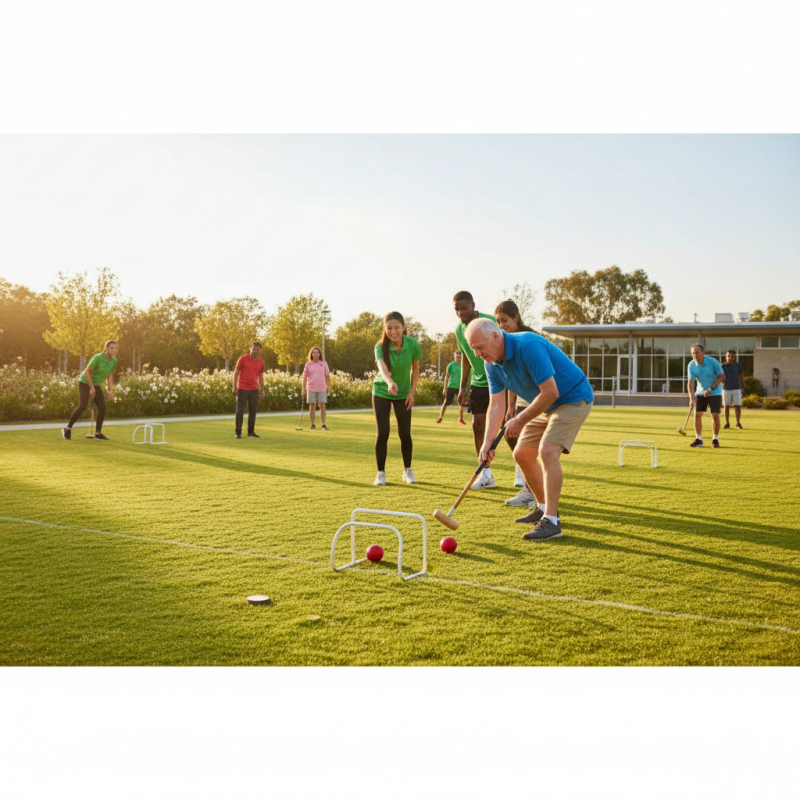
Gate Ball is a unique outdoor game that combines elements of croquet and mini-golf, originating from Japan in the 1940s. It was created as a way for people of all ages to enjoy a friendly yet strategic competition. The game is played on a rectangular grass field with a set of gates and a central goal post. Players take turns using mallets to hit balls through the gates in a specific order, aiming to reach the goal post to score points. The simplicity of the rules and the leisurely pace make it an attractive choice for social gatherings and community events.
The rules of Gate Ball are straightforward but allow for tactical depth. Each team comprises five players, and the game starts with all balls positioned within a designated area. Players must hit their ball through the first gate before proceeding to the next. Scoring occurs not just for successfully reaching the goal post but also for hitting opponent balls, allowing for strategic play and teamwork. The game typically lasts around 30-60 minutes, making it an excellent option for casual play or friendly competition. Overall, Gate Ball encourages social interaction, strategic thinking, and enjoyment, making it a beloved pastime around the world.
The Equipment Needed for Playing Gate Ball: Balls, Gates, and Courts
Gate Ball is a captivating outdoor game that combines elements of croquet and golf, appealing to players of all ages. Understanding the equipment necessary to play effectively is crucial to both enjoyment and strategic gameplay. The primary components required for Gate Ball include balls, gates, and a designated court.
To begin with, each player typically has one ball, which is approximately 7 inches in diameter and can be made of various materials such as plastic or rubber. The balls must be distinguishable in color, as this helps players identify their own during play. According to a report by the International Gateball Federation, the size and weight of the balls significantly influence play dynamics, with heavier balls providing a different level of control compared to lighter ones. Players need to choose their balls based on personal comfort and strategy.
The gates, marked by vertical poles and discs, are strategically placed within the court. The court itself is usually rectangular, measuring 20 meters by 15 meters, with specific markings to delineate boundaries and target areas. Research indicates that the arrangement of gates can greatly affect the outcome of the game, as players must navigate their balls through these gates in a specific sequence to score points. A well-structured court enhances not just the game's challenge but also the fun, making it more engaging for all participants. Understanding and utilizing appropriate equipment is essential for maximizing enjoyment and competitive strategy in Gate Ball.
Gate Ball Participation by Age Group
Understanding the Basic Rules and Scoring System of Gate Ball
Gate Ball is a strategic outdoor game that combines elements of croquet and golf, played on a rectangular field with gates and a goal post. Understanding its basic rules and scoring system is essential for players seeking to enhance their gameplay and enjoyment. Each team consists of up to five players, each taking turns to maneuver their ball through the gates in a predetermined sequence. Successful navigation through all the gates and scoring at the goal post is imperative for a compelling game.
The scoring system in Gate Ball is straightforward yet strategic. Players score points by passing through gates and ultimately hitting the goal post, with each gate worth one point and the goal post worth five points. According to a survey conducted by the International Gateball Federation, approximately 65% of players note that mastering the scoring dynamics significantly improves performance. It often leads to strategic gameplay, where teams must carefully plan their moves to maximize their scoring potential while obstructing opponents from doing the same. Understanding these rules and the scoring system not only enriches the players’ experience but also strengthens their competitive strategies, making the game more enjoyable and engaging.
Effective Strategies for Winning at Gate Ball: Tips for Players
To play gate ball effectively, players must focus not only on their individual skills but also on strategic teamwork. One key strategy is to always be aware of opponents' positions and plan your shots accordingly. Anticipating your opponent's moves can prevent them from scoring easily. For instance, if you see an opponent approaching a gate, you may want to position your ball in such a way that it obstructs their path or sets up for a better shot in the next turn. Keeping an eye on the game’s dynamics and adjusting your tactics in real-time can lead to significant advantages.
Another effective strategy is mastering the sequence of shots. Players should practice different techniques, such as pushing and striking, to control the ball's speed and direction. By understanding how to execute these shots, you can create opportunities for yourself while limiting your opponent’s options. Additionally, communication with teammates is crucial; discussing strategies and forming a combined approach can strengthen your gameplay. Whether it’s deciding who tackles which gates or coordinating defensive moves, a cohesive team can outmaneuver the competition and enhance overall performance in the game.
What is Gate Ball and How to Play It Effectively for Fun and Strategy - Effective Strategies for Winning at Gate Ball: Tips for Players
| Aspect |
Details |
| Game Objective |
To score points by hitting balls through gates and reaching a goal. |
| Number of Players |
Typically played in teams of 3 or 5. |
| Court Dimensions |
A rectangular field of 20 meters by 15 meters. |
| Equipment |
Balls, mallets, gates, and a goal (post). |
| Game Duration |
Usually played until a set number of points, or a fixed time limit. |
| Strategy Tip 1 |
Position your players effectively to maximize scoring opportunities. |
| Strategy Tip 2 |
Communicate with teammates on positioning and tactics. |
| Strategy Tip 3 |
Practice precision shots to improve accuracy through gates. |
Social and Competitive Aspects of Gate Ball: Playing for Fun and Socialization
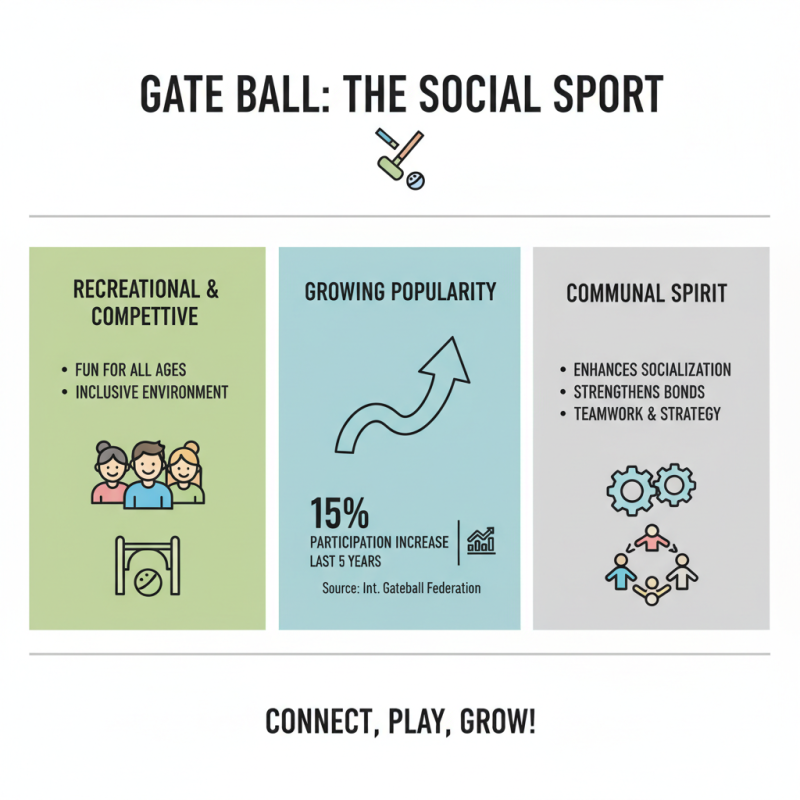
Gate Ball stands out as both a recreational and competitive sport, making it an ideal choice for social gatherings. The essence of the game lies in its accessibility; players of all ages can join in the fun, fostering an inclusive environment. According to a report by the International Gateball Federation, the game has seen a 15% increase in participation over the past five years, highlighting its growing popularity as a social activity. This communal spirit not only enhances socialization but also strengthens bonds among players, encouraging teamwork and strategic thinking.
For those looking to engage in gateball not just for competition but also for fun, here are some tips. First, prioritize communication with your teammates during play to ensure coordination and effective strategies. This not only improves performance but also enhances the social aspect of the game. Second, embrace the learning curve; the more you play, the more strategies you’ll develop, which can lead to enjoyable challenges among friends. Lastly, consider organizing casual tournaments at local parks to foster community engagement and invite new players to experience the joy of gateball.
As gateball intertwines competitive elements with a leisurely pace, it serves as a perfect medium for socialization. Engaging in regular play can lead to the formation of friendships and a stronger community. Furthermore, statistics show that communities with active recreational sports see a 20% boost in social cohesion, showcasing the profound impact of games like gateball on community well-being.